Sign In












 Facebook
 X-Twitter
 Instagram
 Linkedin
 Youtube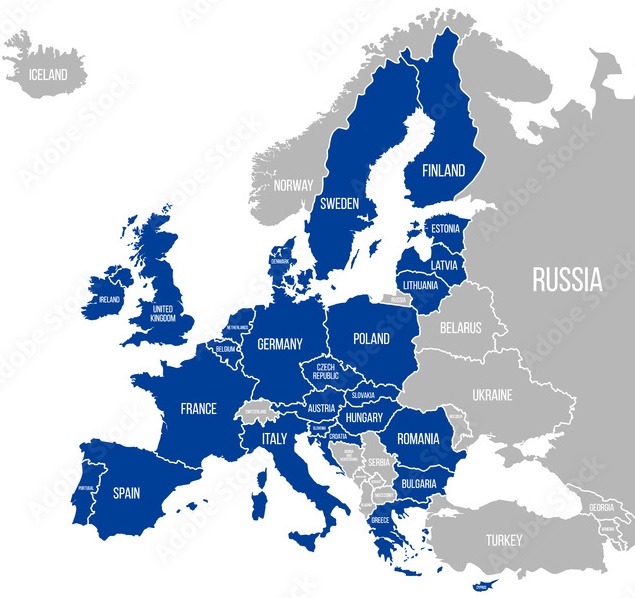

SIGNIFICANCE: Migration from the European Union to the United States has generally reflected economic opportunity, industrialisation, political upheaval, religious and ethnic persecution, war, overseas employment, education, family reunification, and professional mobility.
European migration to the United States began on a large scale during the colonial and early national periods and expanded dramatically during the nineteenth and early twentieth centuries. Millions of migrants arrived from countries that are now members of the European Union, including Ireland, Germany, Italy, Poland, France, Spain, Portugal, Greece, and other parts of Central and Eastern Europe. Many worked in agriculture, mining, manufacturing, construction, domestic service, and other growing industries, while others arrived as merchants, professionals, religious communities, and political refugees. European immigrants established communities across the United States, particularly in New York, Pennsylvania, Massachusetts, Illinois, Ohio, Michigan, California, and other industrial and agricultural regions. They founded churches, schools, newspapers, businesses, labour organisations, cultural associations, and community institutions that helped preserve their languages, traditions, and identities.
European Migration Before the European Union
Before the European Union was established, migration from Europe was shaped by economic hardship, industrialisation, political conflict, religious persecution, changing borders, and major wars. During the nineteenth century, large numbers of Europeans migrated to the United States in search of land, employment, and greater economic opportunity. Irish and German migration was followed by substantial arrivals from Italy, Poland, Greece, and other European regions during the late nineteenth and early twentieth centuries. World Wars I and II, political repression, the Holocaust, and post-war displacement also produced refugees and displaced persons who sought safety and permanent settlement in the United States. Although European countries later developed closer political and economic relationships, migration during this period was primarily organised according to individual national identities rather than a common European framework.
Late-Twentieth- and Early-Twenty-First-Century Immigration
The European Union was formally established in 1993, creating deeper political and economic cooperation among its member states and gradually supporting greater freedom of movement within Europe. Migration from EU countries to the United States continued through employment, higher education, business opportunities, family reunification, scientific research, cultural exchange, and specialised professional work. European migrants increasingly included engineers, scientists, academics, entrepreneurs, healthcare professionals, technology workers, artists, students, and skilled employees. Communities from EU member states remain established throughout the United States, maintaining cultural festivals, language schools, restaurants, religious institutions, professional organisations, and heritage associations. As many EU countries became more economically developed and integrated, migration to the United States became increasingly diverse and often temporary, with students and professionals moving between Europe and America for education, employment, research, and international business.